What is RAG? Retrieval-augmented generation (RAG) is a way of making AI answer from your own documents instead of from memory: the system retrieves the relevant passages first, then the model writes its answer from them. It is the well-established fix for AI that makes things up, and it is the kind of system I build in my applied AI and automation work.
There’s a quiet frustration building inside most organizations that have tried AI.
The demos looked impressive. The technology clearly works. But somewhere between the pilot and production, things went wrong. The AI started making things up. It gave confident answers to questions it had no business answering. It couldn’t access last month’s contracts or last week’s policy update. And when users pushed back, nobody could explain where the answer had come from.
This isn’t a flaw in AI itself. It’s a fundamental limitation of how most AI systems are built, and it has a well-established fix. It’s called Retrieval-Augmented Generation, or RAG. And if you’re building AI systems that need to be accurate, current, and trustworthy, it’s probably the most important concept you need to understand right now.
The core problem: AI that only knows what it was taught
Large Language Models are remarkable. They’ve absorbed vast amounts of text, learned patterns across billions of examples, and can produce fluent, coherent responses across almost any topic. But they have a memory problem.
Everything an LLM knows was baked in during training. Once that process is complete, the model is frozen. It doesn’t know what happened last month. It doesn’t know your company’s internal policies. It has never read your client contracts or your compliance manuals. And critically, when it doesn’t know something, it often doesn’t say so. It fills the gap with something plausible.
This is what the AI research community calls hallucination. And in legal, compliance, or financial contexts, a plausible-but-wrong answer isn’t just unhelpful. It’s a liability.
What is RAG and what does it actually do?
RAG changes the fundamental architecture of how an AI answers a question. Instead of relying purely on what the model memorized during training, a RAG system introduces a retrieval step before the model ever generates a word.
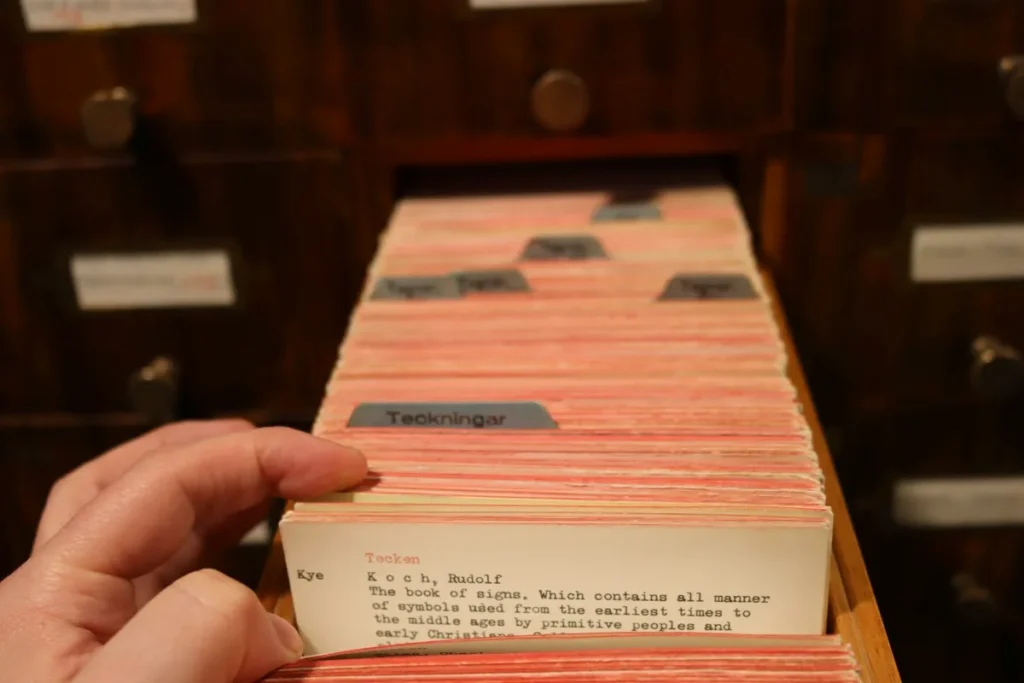
Here’s what that looks like in practice. A user asks a question, say, “What are the notice period requirements in our standard supplier contracts?” Rather than the model immediately generating an answer from its training data, the system first searches your actual document library. It finds the relevant contracts, pulls the pertinent clauses, and hands that content to the model along with the original question. The model’s job is then to synthesize and articulate an answer, grounded in real, verified source material.
The analogy that resonates most with the business teams I’ve worked with is this: it’s the difference between asking a new hire to answer from memory versus asking them to check the file first. One approach gets you confidence. The other gets you accuracy.
Why RAG matters: traceable answers and current knowledge
Source attribution alone changes the trust dynamic entirely. When a RAG system returns an answer, it can cite exactly which document that answer came from. Users can verify it. Auditors can trace it. Compliance teams can review it. That chain of accountability simply doesn’t exist in a standard LLM interaction.
For organizations operating under regulatory scrutiny, such as financial institutions, law firms and healthcare providers, this isn’t a nice-to-have. It’s a prerequisite for using AI in any meaningful capacity.
Beyond accuracy, there’s the currency problem. A standard LLM’s knowledge has a hard cutoff: it knows nothing about regulations published after its training data was collected, contracts signed last quarter, or policy changes made last week. A well-architected RAG system pulls from a live knowledge base. Update a document today, and the retrieval layer reflects that change immediately. The model doesn’t need to be retrained. The knowledge base just needs to be current.
The business case: where RAG delivers real value
The productivity argument for RAG tends to land differently depending on who’s in the room.
Legal teams: case research.
Senior associates spending three hours hunting for precedents across a document repository when a well-tuned RAG system could surface the same material in under a minute. That’s not an incremental improvement. That’s a fundamental shift in how a working day is structured.
Compliance teams: regulatory complexity.
Policies change. Guidance gets updated. Obligations vary by jurisdiction. A RAG system trained on your regulatory library doesn’t just search, it contextualizes. It connects a specific query to the relevant policy framework and surfaces an answer with the source material attached.
Financial services: the scale of the document universe.
Research reports, client communications, risk assessments, transaction records: the volume of text that professionals are expected to synthesize is simply beyond unaided human capacity at pace. RAG doesn’t replace the analyst. It removes the time they spend looking for the raw material so they can focus on the judgment that actually requires human expertise.
Getting RAG right: the quality of your data comes first
RAG is not a plug-and-play solution. The retrieval component is only as good as the data it searches. Poorly structured documents, inconsistent terminology, missing metadata, duplicate records: all of these degrade retrieval quality before the LLM ever sees the question.
In my experience, the organizations that struggle with RAG implementations aren’t usually struggling with the AI. They’re struggling with their data. Getting the retrieval layer right, with clean indexing, a thoughtful chunking strategy and strong search relevance tuning, is where most of the real engineering effort lives. It’s also where most of the business value is unlocked.
A RAG system built on well-governed, well-indexed data will consistently outperform a more sophisticated model working with poor inputs. The principle holds: garbage in, garbage out, regardless of how advanced the model sitting on top of it might be. For an example of retrieval over contracts, see turning a contract audit into a search query.
The bottom line on retrieval-augmented generation
RAG is not experimental. It is the architecture underpinning most of the serious enterprise AI deployments happening right now. The organizations moving fastest aren’t waiting for AI to improve. They’re building the retrieval infrastructure that makes current AI actually usable for high-stakes, accuracy-sensitive work.
If your team is spending more time finding information than acting on it, that’s the problem RAG is designed to solve. If the system also has to decide which tools to use and act on its own, ask first whether you need an AI agent at all.
Common questions about RAG
What is RAG in simple terms?
RAG is a way of having an AI check your documents before it answers. The system searches your library, hands the relevant passages to the model along with the question, and the model writes an answer grounded in that material.
How is RAG different from a standard LLM?
A standard LLM answers from what it learned in training, which is frozen at a cutoff. A RAG system adds a retrieval step first, so the answer draws on your current documents and can cite which one it came from.
Does RAG stop AI from making things up?
It grounds answers in real source material and lets users verify them, which addresses the main cause. It does not fix poor retrieval: if the search returns the wrong documents, the answer will still be wrong.
Do I need to retrain the model when my documents change?
No. A RAG system pulls from a live knowledge base, so updating a document updates what the system can retrieve. The knowledge base just needs to be current.
Why do RAG projects struggle?
Usually because of the data, not the AI. Poorly structured documents, inconsistent terminology, missing metadata and duplicate records all degrade retrieval before the model sees the question.